Reusing Material in Landscape Design


Designing or revamping your Scottsdale landscape is an exciting way to bring diversity into an older layout. Changing a few plant locations, adding new textures, and including a variety of desert plants will undoubtedly give you that “new” Scottsdale landscape feel. But instead of buying materials for your new and improved Scottsdale landscape, why not reuse and repurpose the ones you already have?

Common Scottsdale landscape inclusions are: rocks and/or gravel; cacti; trees and shrubs; and desert flowers. While you may not be able to uproot a 15-year-old saguaro, you can reuse the gravel you already have in your Scottsdale landscape. For example, varying the heights of hills and mounds helps give that natural desert look, and reusing larger rocks/boulders in modern formations will update any Scottsdale landscape.

Next we have compost and mulch in the Scottsdale landscape. You have heard of it, but are you utilizing its potential in your Scottsdale landscape? Making your own compost is one of the best ways to reuse materials in a Scottsdale landscape, as the dryer climate can lend itself to great fermentation. Save plant trimmings, fallen leaves and branches, and roots while you maintain your Scottsdale landscape, and add them to your compost or mulch. The organic matter will give your compost or mulch the makeup it needs to benefit your Scottsdale landscape plants and help them grow to their full potential – all while reusing the stuff you already have!

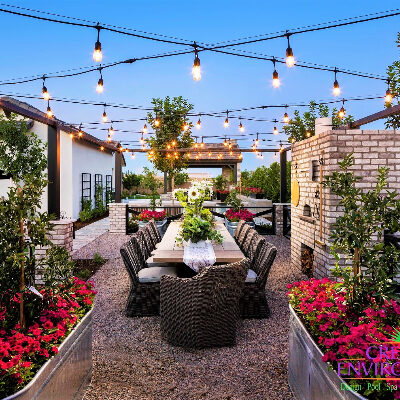
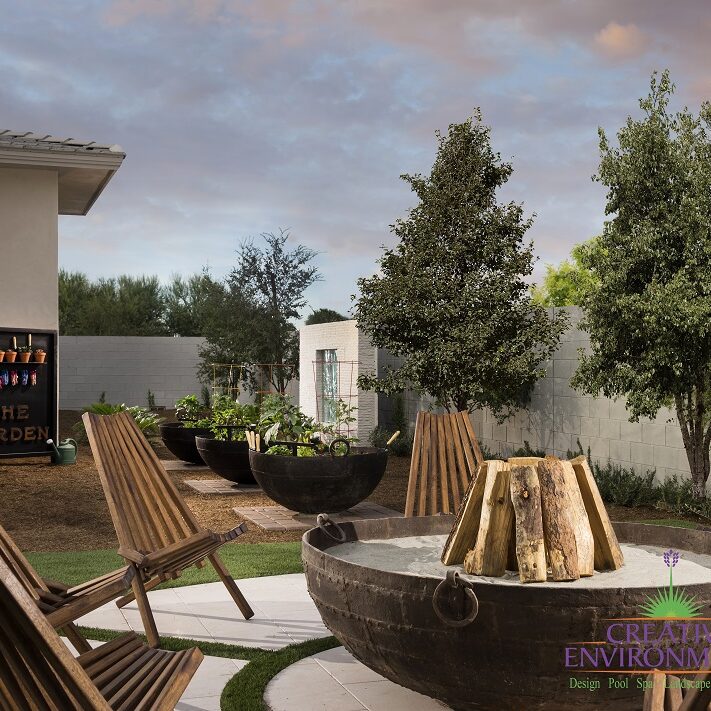
What about using salvaged plastics and woods in your Scottsdale landscape design? This is a great way to go green, while also making use of the materials you might otherwise discard. Scottsdale landscape design will be different according to each individual taste preference. But most Scottsdale landscapes are designed with dynamics, dimensional intrigue, and pops of accent in mind. Using salvaged materials to achieve these goals is a great way to avoid the cookie cutter Scottsdale landscape. You can build planters, garden borders, flower beds, or even reuse vintage wood to create a rustic desert feel in your Scottsdale landscape. The main thing to keep in mind is that reusing materials not only benefits you, it benefits your environment and therefore your entire Scottsdale landscape design.

Desert Architecture and the Aesthetic Potential


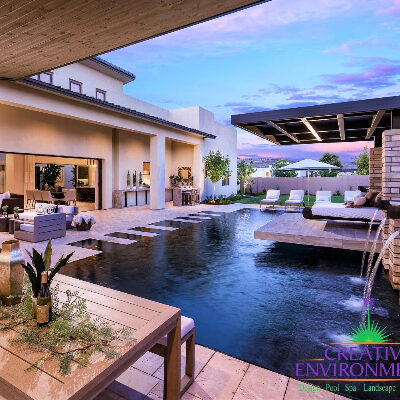
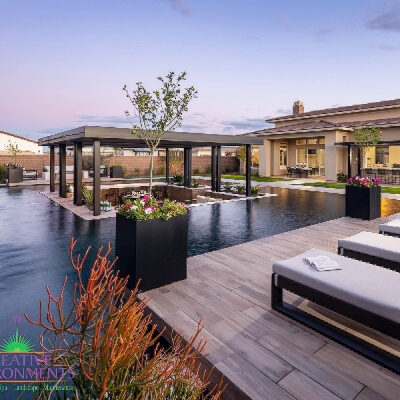
A Scottsdale landscape can possess unique beauty. Scottsdale landscape architecture recognizes the diversity and rarity of desert plants, and can achieve an aesthetically engaging Scottsdale landscape by designing with these characteristics in mind. Professional Scottsdale landscape architects are presented with the task of creating a bold, dynamic, healthy looking Scottsdale landscape with plants that may seem less exciting to the untrained eye. Good Scottsdale landscape design requires familiarity with and appreciation of desert plants, such as cacti, varieties of agave, and palm trees.

Scottsdale landscape architecture is different from landscape architecture in wetter climates because Scottsdale landscape architects have to create a lush, blossoming look with plants and rocks that are not inherently lush looking. But many people underestimate the potential for beauty in a Scottsdale landscape design. Desert plants and trees have traits and colors found nowhere else in the world. Because of extreme heat conditions, Scottsdale landscapes should be naturally water efficient, and many desert plants require little watering outside of a rare rainstorm. Like creating a painting on a canvas, Scottsdale landscape architecture employs angles, vibrant colors (purples, pinks, oranges, bright greens), and dynamic positioning to establish a cohesive and appealing design.

Easy maintenance and exclusive beauty put Scottsdale landscapes in a category all their own. Scottsdale landscape architecture is a very specialized and in depth field. Scottsdale landscape architecture involves additional factors and presents uncommon situations. But the harsh façade of the natural Scottsdale landscape can be molded into a flourishing and rich environment – one that showcases a rare style and refreshing beauty, both for homeowners, business owners, and everyone in between.

Pollen is nothing to sneeze at


Say the word "pollen" and anyone with allergies will probably react negatively. But the truth is we could not live without it. Virtually all of the plants and foods we eat rely on pollen to grow. Even things you probably don't think of as plant foods, like coffee and chocolate, would not exist without pollination.

Pollen is so important that Congress has dedicated a week to it. The third week in June is National Pollinator Week. They did this to raise awareness about the serious threats facing our food supply. Honeybee populations in the United States have dropped up to 50% in some areas, due to a phenomenon known as Colony Collapse Disorder.

Some of the reduction in bee populations is due to natural factors like disease and mites. But pesticide use and habitat loss play a role as well. Some scientists speculate that genetically altered pest resistant crops may be harming bee populations. 

The good news is that everyone can help honeybees and other pollinators by planting gardens that attract butterflies, hummingbirds, and other pollinators. These eco-friendly critters need year round sources of nectar and pollen. They are drawn to landscape design that includes large clumps of flowering plants. Ideally, you'd want to include flowers that bloom at different times of the year, to ensure a steady supply of food. Plant native species whenever possible, as these plants are already in the diet of the pollinator species in your area.

Another thing you can do to encourage the birds and bees in your landscape design, is to include some natural material for them to nest in. Dead tree limbs don't look so great in a tree, but can be used as yard art in combination with some rocks and plants.

One of the most important things to do is reduce how much pesticide you use around your property. Choose natural pest controls whenever possible, and pick weeds rather than spray them. Arizona's hummingbirds and butterflies in your area will stop by your yard and provide a little display of nature's beauty, as a thank you.

Alternative Turf


A key piece of any landscape design is turf selection. Even in dry climates like Arizona and the desert southwest, an expanse of well manicured grass gives a landscape a classic, gentrified touch. But watering and maintaining a lawn can be expensive and time consuming, leading many people to look for grass alternatives. Some popular alternatives are prairie or ornamental grasses, ground covers, and artificial turf.

Among the ornamental turf grasses, a couple popular ones are Buffalo grass, and UC Verde, created by a California University. Buffalo grass uses very little water, and grows to be about six inches high. It only needs mowed a few times a year. The UC Verde is among the most heat tolerant of grasses, and also uses very little water. A nice additional benefit of UC Verde grass is that it gives off very little pollen, which is good news for allergy sufferers.

These grass-type turfs have a natural, wind-blown look and fit particularly well into xeriscape and desert landscape design. They can handle foot traffic and are a good landscape choice for families with kids and dogs. They do go dormant in the winter, but in the desert southwest this is a short period.  

Using ground cover as an alternative to grass is not a new idea, and there are as many types and kinds as there are lawns. Clover, or dichondra, is a time tested variety. It only grows to be two inches tall, so it doesn't need mowed very often. Clover has a striking, deep green color and is very soft to walk on. It does tend to take more water than the prairie grasses, but is still a good low-maintenance lawn alternative.

Herbs like chamomile and thyme can also be grown as ground covers. They will spread over large expanses of soil and remain low to the ground. They can be mowed or trimmed with a weed whacker occasionally if needed. They feel nice to walk on and some, like thyme, are very fragrant and pleasant to have in a garden.

Another type of ground cover is sedum, which is getting a lot of attention in the media these days. There are about 400 types of sedum, and many gardeners value these hardy, succulent plants for their beauty and drought tolerance. It won't handle a lot of foot traffic. But sedum is an excellent grass alternative for hillsides or rocky areas.

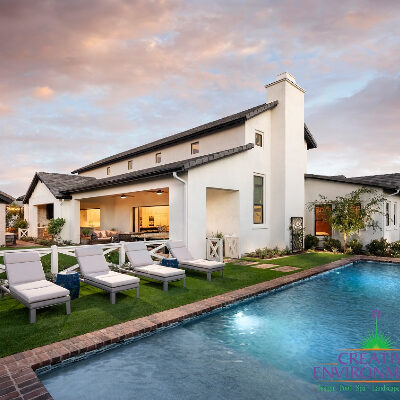
If you really want the look of a carefully manicured lawn without any maintenance or watering costs, artificial turf is the way to go. These products have come a long way since the days of astro turf and look really good. Artificial turf comes in a wide range of colors with subtle shading on the blades, for a very natural appearance. There are a couple downsides to synthetic grass. Upfront installation costs can be several dollars a square foot. And in the heat of an Arizona summer it can be as hot to walk on as asphalt. But it never needs watering or mowing and will remain looking like new for years.


Scottsdale Road Street-scape and Landscape Design Guidelines

Scottsdale Road is the signature road of Scottsdale, obviously since its named Scottsdale Road! It may not be the most scenic road in Scottsdale for most of its length, there are some sections of Scottsdale Road where the landscape design is great.

So what does the city of Scottsdale use to provide their hardworking landscaping crews with instructions for where to use Agaves and where to use Brittlebush? The Scottsdale Road Street-scape and Landscape Design Guidelines of course.

Get it all here

http://www.scottsdaleaz.gov/projects/CapitalProjects/ScottsdaleRd/SRstreetscape.asp

Including

Scottsdale Southern Gateway Streetscape / Landscape Design: McKellips Road to Earll Drive

Scottsdale Downtown Streetscape / Landscape Design: Earll Drive to Chaparral Road

Scottsdale Resort Corridor Streetscape / Landscape Design: Chaparral Road to Mountain View Road

Scottsdale Central Corridor Streetscape / Landscape Design: Mountain View Road to Frank Lloyd Wright

Scottsdale Northern Corridor Streetscape / Landscape Design: Frank Lloyd Wright Boulevard to Happy Valley

Scottsdale Desert Foothills Scenic Drive Streetscape / Landscape Design: Happy Valley Road to the North City

Checking a Scottsdale Landscape Architect

So you found a landscape architect in Scottsdale? What do you do to check their qualifications? Well one thing you can do is check if they are registered with the American Society of Landscape Architects - Arizona Chapter.

Landscape Architects are alos registered and licensed by the State of Arizona. Check with the Arizona State Board of Technical Registration for your Architect's status.

For example if you were evaluating a Scottsdale Commercial Landscape Architect ask them for their license number and registration number in addition to check their evaluations at other sites or references.

Good luck with your Landscaping Project!

Scottsdale Landscaping Design Guidelines

WHERE ARE THE SCOTTSDALE LANDSCAPE DESIGN POLICIES LOCATED?

The Scottsdale Landscaping Design policies may be viewed at :
the Planning and Design Library at the
Community Design Studio, 7506 E Indian School Road
The Records Counter,
7447 E Indian School Road, Ste 105
WHAT IS THE SCOTTSDALE LANDSCAPE DESIGN POLICY?

These Guidelines were created to be used with the Sensitive Design Principles to ensure quality and compatible landscaping.
WHERE DOES IT APPLY?

Citywide, applied to new development, redevelopment, and major renovation projects. (The Downtown area has its own specific guidelines)
WHO NEEDS TO USE THE SCOTTSDALE LANDSCAPE DESIGN POLICIES?

Scottsdale Residents and Scottsdale neighborhoods, Scottsdale Development Review Board (DRB), Scottsdale City staff, Scottsdale developers and Scottsdale property owners, all those involved in the development review process.
WHY WAS THE SCOTTSDALE LANDSCAPE DESIGN DEVELOPED?

In response to increasing concerns about the quality and character of design in the community, the Scottsdale City Council, Scottsdale Planning Commission, and Scottsdale Development Review Board (DRB) directed staff to establish the Scottsdale Design Principles and to prepare design guidelines for a range of development types in Scottsdale. The Scottsdale landscape design guidelines are intended to help conceive environments that are functional, purposeful, and aesthetically pleasing and that contribute to the design continuity of an area.
Development Review Board adoption - 1999 - 2003
KEY POINTS:

Landscape design should consider foremost the unique qualities, and common built and natural aesthetic characteristics, of a project's surroundings.
Right-of-way planting should conform to established or planned streetscape designs of the City or that of privately planned areas.
Base planting areas should be incorporated along all building and parking structure frontages. Base planting areas can occur as raised or in-ground planters.
Canopy trees should be used throughout all paved circulation/parking areas and in association with pedestrian paths and gathering areas to provide shade, reduce heat build-up, and cut glare.
Parking areas should be broken up with landscaping. Pedestrian corridors through parking areas should have a minimum width of 15 feet and be composed of landscaping with a minimum 5-foot wide sidewalk.
A combination of dense landscaping, site walls, or berming/mounding should be provided to screen parking facilities, service and loading areas, maintenance areas, storage areas, trash enclosures, utility cabinets, and other similar elements.
Plants should be selectively pruned to maintain an appearance that exhibits the qualities and characteristics of the plant in its natural state. Shrub plantings should be located to form a mass by allowing plants to grow together.

See Phoenix Landscape Design information